What Is Escrow and How Does It Work? A Plain-English Guide
By Terry Leinneweber · May 7, 2026
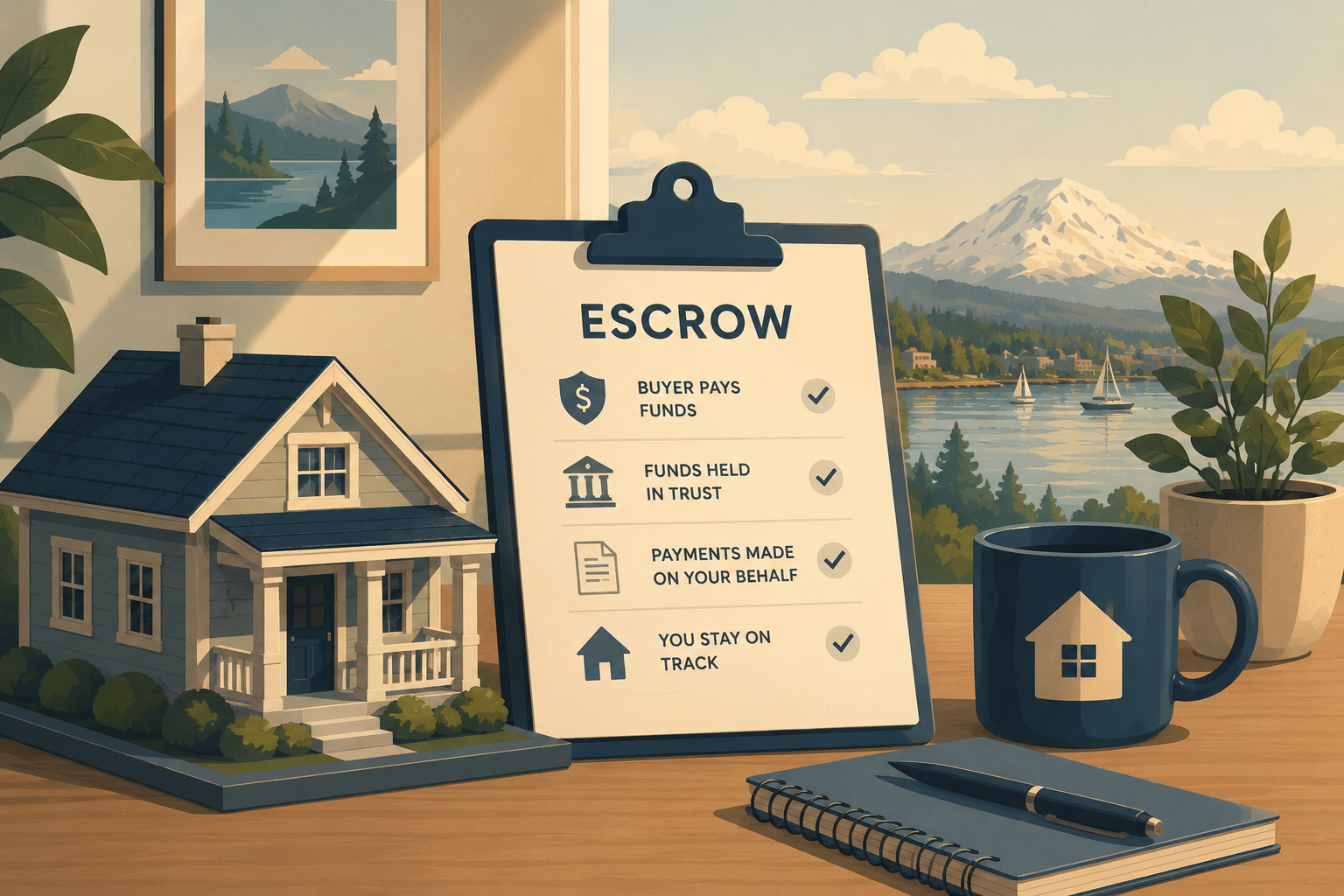
Escrow shows up twice in the homebuying process and confuses buyers both times. Here's exactly what it is, how it works, and what to expect. Primary Keyword: what is escrow and how does it work
What Is Escrow and How Does It Work? A Plain-English Guide
The word "escrow" shows up early in the homebuying process and never really leaves.
Your real estate agent mentions it when you make an offer. Your lender mentions it when you close. Then your mortgage statement mentions it every single month for the life of your loan.
Most buyers nod along and assume they will figure it out later. Then later arrives and they are staring at a confusing line item on a statement or an unexpected bill from their lender, wondering what happened.
Escrow is not complicated. But it does two distinct jobs in the homebuying process, and most explanations only cover one of them. This post covers both, so you know exactly what escrow is, what it protects, and what to expect from it month to month as a homeowner.
Escrow Has Two Separate Jobs
This is where most explanations lose people. They treat escrow as one thing when it is actually two different systems that happen to share the same name.
The first is the purchase escrow that opens when you go under contract on a home. The second is the mortgage escrow account your lender sets up at closing to collect your taxes and insurance.
They work differently. They serve different purposes. Here is how each one works.
Part One: Escrow During the Home Purchase
When you make an offer on a home and the seller accepts it, both parties are now under contract. You have agreed to buy. They have agreed to sell. But the transaction is not done. There is an inspection period, an appraisal, title work, and loan processing still to get through. That can take 30 to 45 days or longer.
During that window, you cannot hand the seller your down payment and the seller cannot hand you the keys. The deal is not final yet. So a neutral third party holds everything in the middle. That is escrow.
An escrow company, often a title company or escrow officer, collects your earnest money deposit, which is the good-faith deposit you put down when your offer is accepted, and holds it securely until closing. At closing, that money is applied toward your down payment or closing costs, the seller receives their proceeds, and the title transfers to you.
The escrow officer also coordinates the paperwork flow between your lender, the title company, the real estate agents, and both parties. They make sure every document is signed, every condition is met, and every dollar goes where it is supposed to go. Nothing moves until all the pieces are in place.
This version of escrow protects both sides. If the deal falls apart for a covered reason, such as a failed inspection contingency or financing that does not come through, escrow ensures your deposit is returned according to the terms of the contract. The seller cannot simply pocket your money because the transaction did not close.
Once closing is complete, this escrow account is closed. Its job is done.
Part Two: Your Mortgage Escrow Account
This is the one that affects you every month for as long as you carry a mortgage.
At closing, your lender sets up an escrow account specifically to collect and pay your property taxes and homeowner's insurance on your behalf. Instead of receiving one large tax bill twice a year and a separate annual insurance premium, you pay a portion of both into your escrow account every month alongside your principal and interest.
Your lender then holds that money and makes the payments when they come due.
Here is a simple example of how the math works. If your annual property tax bill is $4,800 and your homeowner's insurance premium is $1,800 per year, your total annual escrow requirement is $6,600. Divide that by 12 and your lender collects $550 per month into escrow on top of your principal and interest payment.
That $550 is not extra. It is your tax and insurance obligation, just spread into equal monthly installments instead of one or two large lump sums per year.
Why Lenders Require Escrow
Your lender requires escrow on most loan types because the home is the collateral for your loan. If your property taxes go unpaid, the government can place a lien on the home. If your homeowner's insurance lapses and the home is damaged, the lender's collateral is at risk.
Escrow protects the lender's investment in your property by making sure those bills never get missed.
Most conventional loans require escrow when your down payment is less than 20 percent. FHA loans, VA loans, and USDA loans require escrow in almost all cases. Some lenders offer an escrow waiver for buyers with significant equity, but it often comes with a small fee and requires strong creditworthiness.
The Annual Escrow Analysis
Here is the part that surprises most homeowners in their first year.
Every 12 months, your lender performs an escrow analysis. They review what your taxes and insurance actually cost over the past year, recalculate what the coming year is projected to cost, and adjust your monthly escrow payment accordingly.
If your property taxes increased, your monthly payment goes up. If your insurance premium dropped, your payment may go down slightly. If your escrow account was short, meaning the lender paid out more than it collected, you will receive a notice showing a shortage. You can pay that shortage in a lump sum or have it spread across your next 12 monthly payments.
If your account had a surplus, meaning more was collected than spent, lenders are required to refund you anything over a federally allowed cushion. Most lenders are permitted to hold up to two months of projected escrow payments as a reserve buffer. Anything above that comes back to you.
Do not ignore your annual escrow analysis statement when it arrives. It tells you exactly what changed, why your payment is adjusting, and what you owe or are owed. It is one of the most important documents you will receive as a homeowner, and most people throw it in a drawer without reading it.
What Escrow Does Not Cover
Your escrow account pays property taxes and homeowner's insurance. That is it.
It does not cover HOA dues, even though those are also a recurring ownership cost. HOA fees are billed directly by your homeowners association and are your responsibility to pay separately. Missing them can result in liens just like unpaid taxes, so treat them as a non-negotiable monthly expense.
It also does not cover utility bills, maintenance costs, or home warranty premiums. Those come to you directly.
The Bottom Line
Escrow does two jobs. It protects your deposit and coordinates your closing when you buy. Then it manages your tax and insurance payments for as long as you have a mortgage.
Neither version is something to fear. Both exist to keep money and obligations organized, and to make sure no critical bill falls through the cracks during one of the largest financial transactions of your life.
The key is understanding what your escrow account covers, what it does not, and what to do when your annual analysis shows a change.
If you have questions about how escrow will factor into your specific loan or payment structure before you buy, that is a conversation worth having before you are under contract, not after.
Want a clear picture of your full monthly payment, including escrow, before you make an offer?
Schedule a free 15-minute call and we will walk through every number together.