The Pre-Approval Mistakes No One Warns First-Time Buyers About
By Terry Leinneweber · May 5, 2026
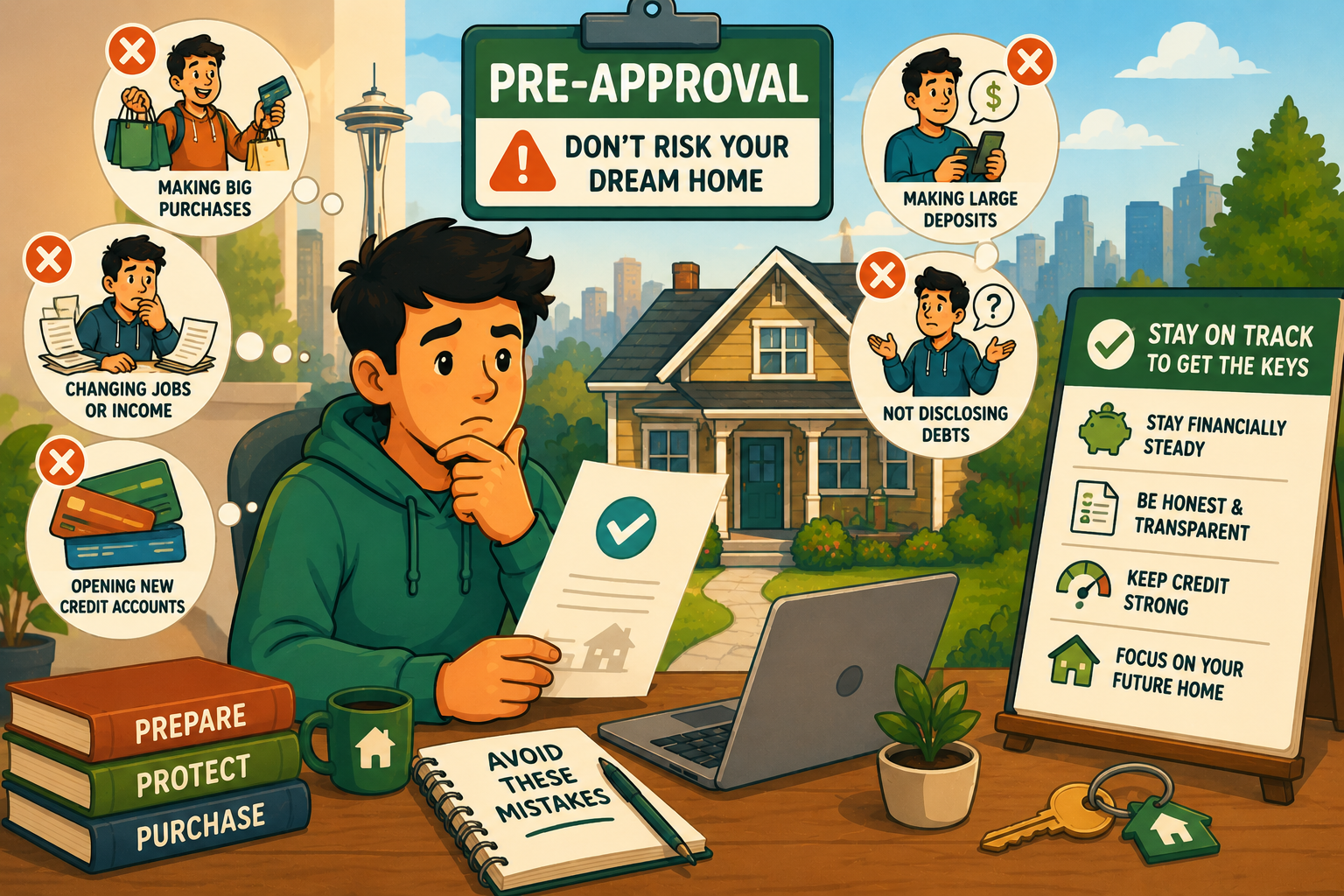
Getting pre-approved seems simple. But these common mistakes can cost you the home you want.
Pre-Approval Mistakes First-Time Buyers Almost Always Make
You did the thing everyone told you to do. You got pre-approved.
You have a letter. You have a number. You feel ready.
Here's the problem: pre-approval is not a finish line. It's a starting gun. And between the moment you get that letter and the day you actually close on a home, there are at least a half-dozen ways to blow the whole thing. Nobody warns you about them ahead of time, which is exactly why so many first-time buyers get blindsided.
This post covers the most common pre-approval mistakes that derail real transactions, and what you need to do instead.
Mistake #1: Confusing Pre-Qualification With Pre-Approval
These two terms sound like the same thing. They are not.
Pre-qualification is a surface-level estimate. A lender asks you a few questions about your income, debts, and assets and gives you a ballpark number. Nothing is verified. It holds almost no weight with sellers.
Pre-approval is a real underwriting review. The lender pulls your credit, verifies your income, and reviews your documents. The number they give you is based on actual data. Sellers and their agents know the difference.
If you're shopping homes with only a pre-qualification letter, you may not be taken seriously in a competitive market. Get the full pre-approval done before you start making offers.
Mistake #2: Opening New Credit or Making Large Purchases
This one kills more deals than almost anything else.
Once you're pre-approved, your debt-to-income ratio, that's the percentage of your gross monthly income that goes toward debt payments, is locked into your file. The moment you take on new debt, that ratio changes. Your lender will pull your credit again right before closing. If they find a new car payment, a new credit card, or a major purchase you financed, your loan could be denied.
Do not open any new lines of credit. Do not finance furniture, appliances, or a vehicle. Do not co-sign for anyone else. Hold every financial decision until after the keys are in your hand.
Mistake #3: Changing Jobs During the Process
Lenders want to see stable, consistent income. A job change, even a promotion to a higher-paying role, introduces uncertainty that underwriters do not like.
If you switch from salaried to self-employed, the problem compounds significantly. Self-employed income requires two years of tax returns to verify, so a recent transition can disqualify you entirely on conventional lending guidelines.
If a career move is unavoidable, talk to your loan officer before you make it. There are scenarios where it can be managed, but only if you plan ahead. Surprises after you're under contract are much harder to recover from.
Mistake #4: Not Understanding What Pre-Approval Actually Covers
Your pre-approval letter gives you a maximum loan amount. That number does not account for property taxes, homeowner's insurance, HOA dues, or PMI if applicable.
PMI, or private mortgage insurance, is a monthly premium added to your payment when your down payment is less than 20 percent on a conventional loan. On an FHA loan, mortgage insurance is required regardless of down payment size. These costs can add hundreds of dollars a month to what you actually owe.
Before you start shopping, ask your loan officer to build out a full payment estimate including all of these costs for a realistic home price range, not just the pre-approval ceiling. The max you qualify for and the payment you can actually live with are two different numbers.
Mistake #5: Letting Your Pre-Approval Expire
Most pre-approvals are valid for 60 to 90 days. If your home search runs longer than that, your letter expires and you'll need to go through the process again. If anything in your financial picture changed during that time, the outcome might be different.
If you're in a slower market or dealing with a competitive search, check in with your loan officer every 45 to 60 days. Refreshing early is much easier than scrambling for a new approval while you're already in contract.
Mistake #6: Assuming One Pre-Approval Is Enough Shopping
Getting pre-approved with one lender does not mean you've found the best deal. Rates, fees, and loan products vary from lender to lender. A quarter-point difference in rate on a 30-year mortgage can mean tens of thousands of dollars over the life of the loan.
Shopping multiple lenders within a short window, typically 14 to 45 days depending on the scoring model, is treated as a single credit inquiry for your score. It does not hurt you the way people fear. What it can do is save you real money.
You have the right to compare. Use it.
Mistake #7: Not Disclosing Everything Up Front
When your loan officer asks for documents, be thorough. Undisclosed debts, gaps in employment, side income, or co-signed loans have a way of surfacing during underwriting. And when they surface late, they delay closings or kill them entirely.
This isn't about judgment. It's about strategy. When your loan officer knows the full picture from the start, they can choose the right loan product for your situation and anticipate any issues before they become problems.
If you're self-employed, recently divorced, carrying student loans, or have any non-traditional income, say so early. There are loan programs designed specifically for complex profiles, including bank statement loans for self-employed buyers and FHA loans for buyers with lower credit scores or limited down payment savings. But none of that works if your loan officer doesn't have the full story.
The Bottom Line
Getting pre-approved is a smart first move. But it's not a guarantee, and it's not a green light to stop paying attention.
The buyers who make it to closing without drama are the ones who treat their pre-approval like it matters, because it does. They don't open new credit. They don't change jobs without checking first. They ask questions early and stay in contact with their loan officer throughout the process.
That kind of communication is exactly what working with an experienced broker makes easier.
Ready to get pre-approved the right way, or get a second opinion on one you already have?
Schedule a free 15-minute call and we'll walk through your full picture before you start making offers.