How Your Credit Score Affects Your Mortgage Rate in Washington
By Terry Leinneweber · May 29, 2026
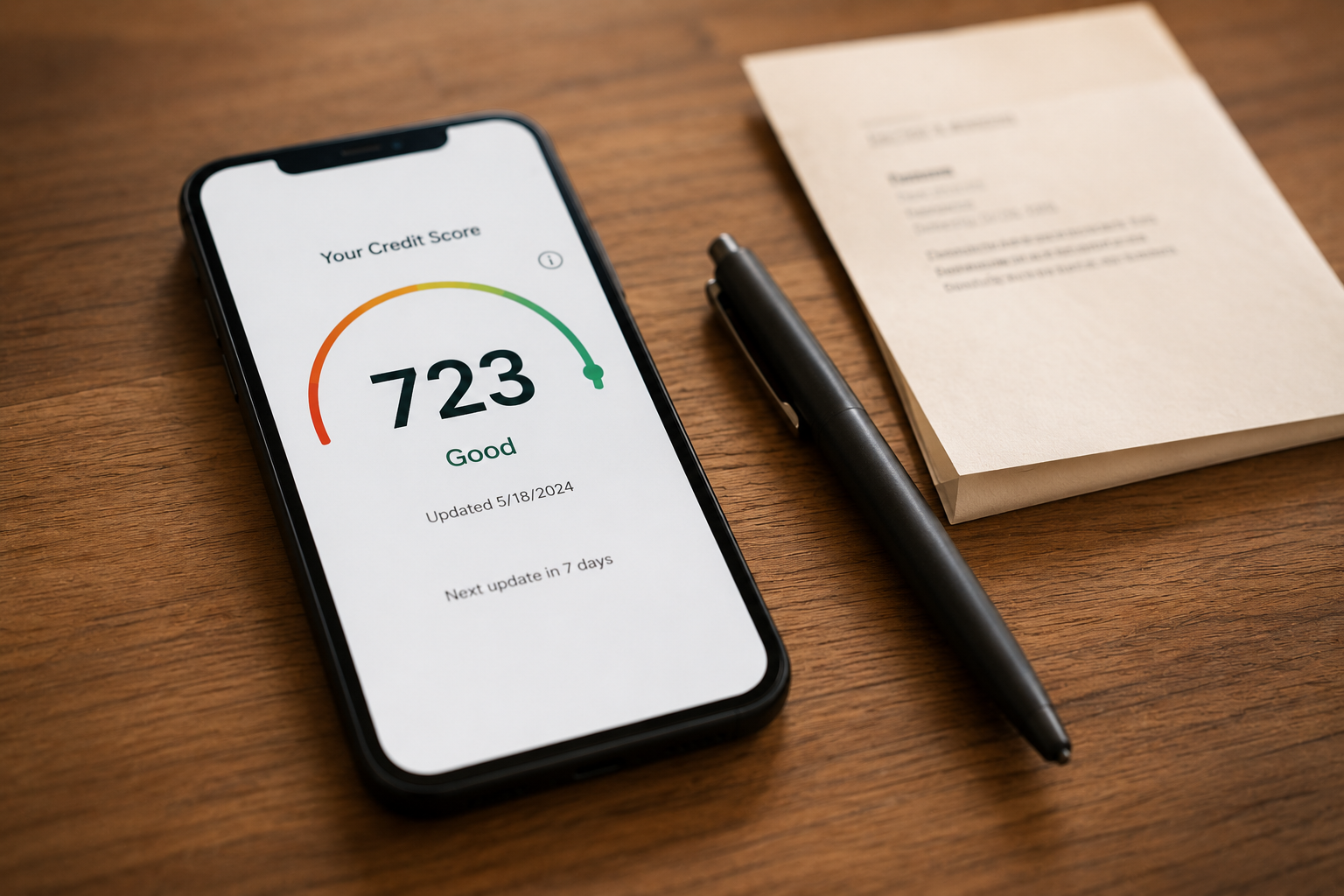
Your credit score is the single biggest factor in your mortgage rate. Here's exactly how much each tier costs you in Washington — and what to do if yours needs work.
How Your Credit Score Affects Your Mortgage Rate in Washington State
Your credit score is not just a number that determines whether you qualify for a mortgage. It determines what that mortgage costs you every single month for the next 30 years.
Most buyers understand in a general sense that a higher score means a better rate. What most buyers do not fully grasp is how large the difference actually is, and how much of a direct dollar impact even a modest score improvement can have before they apply.
In Washington's market, where purchase prices are high and loan amounts are large, the math matters more than it does almost anywhere else in the country. A rate difference that seems abstract at the application table becomes tens of thousands of dollars over the life of the loan.
Here is exactly how it works, what the tiers look like in 2026, and what you can do if your score needs work before you apply.
How Lenders Actually Use Your Score
Your credit score is a three-digit number ranging from 300 to 850, calculated by FICO using data from your credit reports across Experian, Equifax, and TransUnion. Most mortgage lenders pull all three scores and use the middle number. For joint applications with two borrowers, the lender typically uses the lower of the two middle scores.
Many lenders use a process called loan-level pricing. The credit score scale is divided into 20-point increments, and a borrower's rate adjusts with each 20-point move up or down the scale. Every time a borrower's score moves down a level, there is an increase in cost.
This tiered structure is why a score of 719 and a score of 720 are not equivalent. One sits in a higher pricing tier than the other. The difference between those two numbers can be zero dollars per month or it can be a meaningful rate adjustment, depending on where the tier boundary falls.
Mortgage lenders price rates in credit score tiers, typically moving in 20-point increments. Even a 20-point difference can push your rate higher. Chase
What the Tiers Actually Cost You
The difference between the lowest and highest credit score tiers is not trivial.
Comparing the highest and lowest credit score tiers, the borrower with better credit saves about $165 per month and $59,274 in total interest over the life of their mortgage loan, based on a 30-year fixed-rate mortgage.
Scale that to Washington's higher loan amounts and the gap widens. A $300,000 loan is a starting point in most of the state's active markets. In King County, Snohomish County, or Pierce County, buyers are commonly borrowing $500,000 to $800,000. At those loan amounts, the rate differential between a 640 score and a 760 score does not produce $165 per month in savings. It produces significantly more.
In 2026, a middle credit score of around 760 to 780 is widely understood to unlock the most competitive conventional rates. Below 720, rates rise more noticeably and fewer best-rate options may be available.
Here is how the tiers generally break down for conventional mortgage pricing:
760 and above. This is where you access the best available conventional rates with no loan-level price adjustments for credit. If your score is here, your rate is being priced on the quality of your file overall, not penalized for credit risk.
720 to 759. Still strong territory. You will qualify for competitive rates and most loan programs. The gap between this tier and 760-plus is real but relatively modest.
680 to 719. You will qualify for conventional financing, but loan-level price adjustments begin to apply, increasing your rate or your costs. The difference between 680 and 760 on a $500,000 Washington loan is not cosmetic. It is hundreds of dollars per month and tens of thousands of dollars over the life of the loan.
640 to 679. Conventional financing is available but pricing is meaningfully higher. FHA may offer a more cost-effective path at this score range because FHA does not use loan-level price adjustments the same way conventional does. For government-backed loans like FHA, as long as your score is above 660, lenders often treat borrowers the same in terms of rate. These loans are more about access and less about rewarding ultra-high credit. Affordably
580 to 639. FHA is the primary path at this score range with 3.5% down. Conventional financing is technically available above 620 but carries significant rate penalties. The cost difference between using FHA at 620 versus waiting to improve to 700 before going conventional is worth calculating carefully before you decide.
Why Your Score Changes the Loan Type Conversation
Your credit score does not only affect your rate within a loan type. It affects which loan type is the most cost-effective option for your situation.
A buyer at 660 with 5% down pays a penalized conventional rate plus PMI. The same buyer might find that an FHA loan at that credit profile, despite carrying mandatory MIP, produces a lower total monthly cost because FHA pricing at 660 is less punished than conventional pricing at the same score.
A buyer at 740 with 5% down is in the opposite position. The conventional rate at that score is strong enough, and the PMI cost is low enough, that conventional beats FHA's MIP cost structure over any reasonable holding period.
This is why running both scenarios before you commit to a loan type is worth the fifteen minutes it takes. The right answer depends on your specific score, your down payment, and how long you plan to hold the loan.
What You Can Do If Your Score Needs Work
Credit improvement before a mortgage application is one of the highest-return activities a buyer can undertake. A 40-point improvement in your score can lower your rate enough to save hundreds of dollars per month, every month, for the life of the loan. No investment strategy returns that reliably.
Here is what actually moves the needle in the months before you apply.
Pay down revolving balances. Credit utilization, the percentage of your available credit card and revolving credit limits that you are currently using, makes up approximately 30% of your FICO score. People with 800-plus FICO scores average around 6% utilization. The common under-30% advice is the danger threshold, not the target. Aim for single digits. Paying down a credit card from 60% utilization to under 10% can move your score 20 to 40 points within a single billing cycle.
Do not open new credit. Avoid opening new credit cards or auto loans for at least six months before your mortgage application. New accounts temporarily lower your score and can push your debt-to-income ratio above your lender's preferences. Do not close old, paid-off cards either, as doing so reduces your available credit and shortens your credit history.
Fix errors on your credit report. Pull your reports from all three bureaus at AnnualCreditReport.com. Errors appear more often than most people expect. A collection account that is not yours, a late payment that was actually on time, or a balance that was not updated after payoff can all be dragging your score down through no fault of your own. Disputing and correcting these errors can produce meaningful score improvement within 30 to 60 days.
Make every payment on time. Payment history is 35% of your FICO score, the single largest factor. Even one late payment can hurt your credit score, especially if it is more than 30 days past due or if you do not have much credit history. If you have a thin credit file, even one missed payment at the wrong time can cost you a rate tier.
Do not pay off old collections without guidance. This is counterintuitive, but paying off a very old collection account can sometimes reactivate it and refresh the date on your credit report, temporarily hurting your score. Talk to your loan officer before making any moves on older derogatory accounts.
How Long Does It Take to Improve Your Score?
The honest answer depends on what is holding your score down.
Utilization improvements show up within 30 to 45 days of the new balance being reported. Error corrections can take 30 to 60 days to process and reflect. Late payments and collections take longer and may not fully resolve before your application, but consistent on-time payment history rebuilds score steadily over 6 to 12 months.
The decision to delay your mortgage application while improving your credit depends on how much you can realistically improve your score and what mortgage rates are doing. Use a mortgage calculator to model both scenarios before deciding.
If your score is 40 to 60 points below a meaningful pricing tier and you can close that gap in 90 days of deliberate credit management, the wait is almost always worth it in Washington's high-price market. If your score is already at 730 and waiting six months to reach 760 means missing a home that fits your family, the per-month savings from the rate improvement may not justify the opportunity cost.
That calculation is specific to your numbers. Get it done before you decide.
The Bottom Line
Your credit score is the most controllable variable in determining what your mortgage costs. Unlike the market, unlike home prices, unlike interest rate policy, your credit score is something you can actively improve before you apply.
In Washington, where a typical purchase requires borrowing $500,000 or more, the rate difference between a 660 score and a 760 score on that loan amount is not a rounding error. It is a material monthly cost that compounds over decades.
Know where you stand. Know what tier you are in. And if there is a realistic path to a better tier before you apply, take it. The savings are permanent.
Want to know exactly what mortgage rate your current credit score qualifies you for in Washington?
Schedule a free 15-minute call and we will pull your credit, show you your tier, and tell you exactly what improving your score would do to your rate and monthly payment before you make any decisions.
Or call or text directly: (360) 801-6980
Terry Leinneweber | NMLS #2003490 | Dwell Mortgage | Licensed in Washington State