What Is LTV? How Loan-to-Value Ratio Affects Your Mortgage
By Terry Leinneweber · June 5, 2026
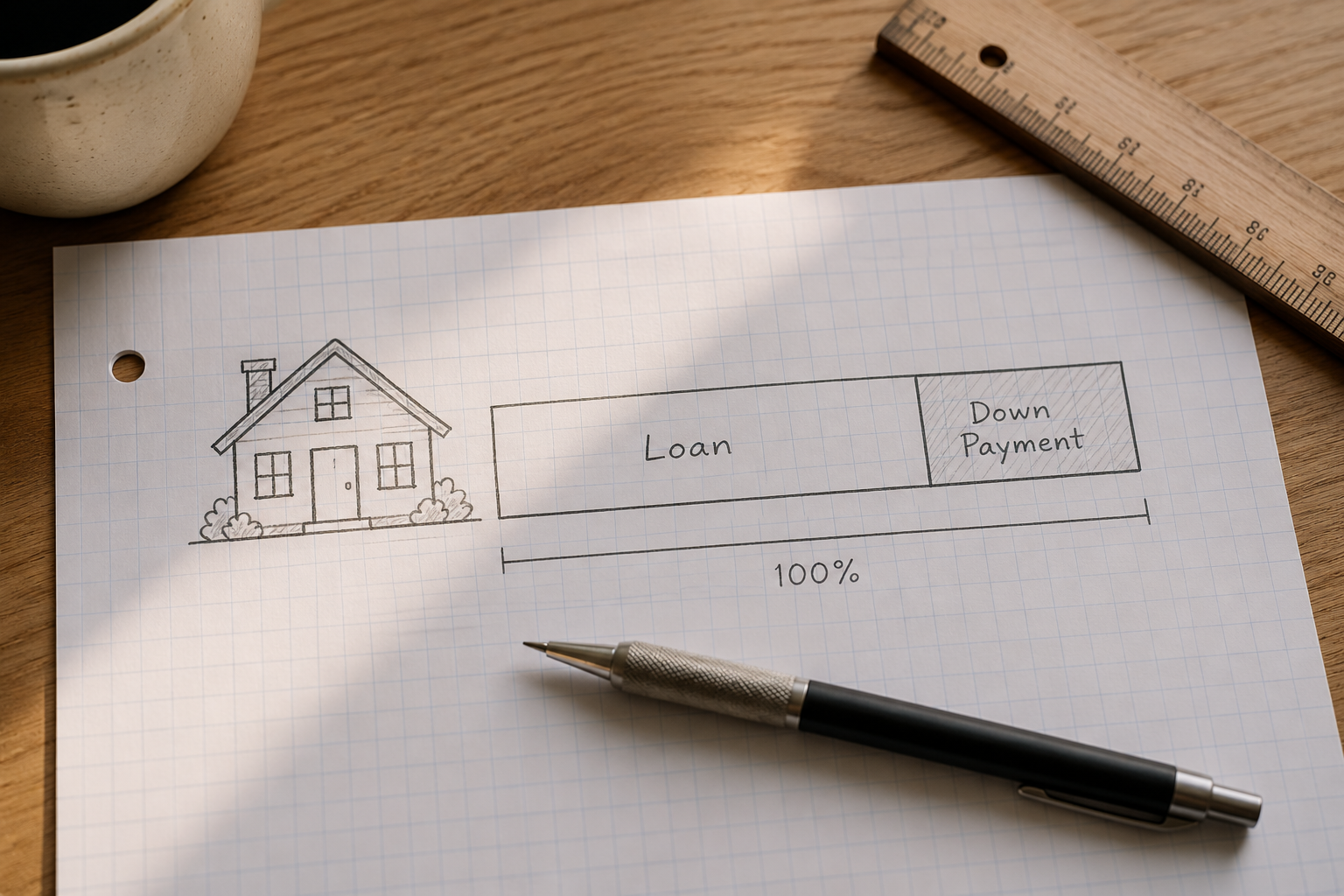
Your LTV ratio affects your rate, your PMI, and whether you qualify at all. Here's what it means and how to use it to your advantage.
What Is LTV? How Loan-to-Value Ratio Affects Your Mortgage
Most buyers focus on the interest rate. What they miss is the number that heavily influences what rate they're even offered in the first place.
That number is your loan-to-value ratio, or LTV. It's one of the core inputs lenders use to price your loan, set your terms, and decide how much risk they're taking on. Once you understand it, a lot of other mortgage decisions start to make more sense, including why your down payment size matters beyond just the monthly payment.
Here's how LTV works and what it means for your mortgage.
How LTV Is Calculated
LTV is the percentage of a home's value that you're borrowing. The formula is simple: divide your loan amount by the appraised value of the home, then multiply by 100.
If you're buying a $500,000 home and putting $50,000 down, your loan amount is $450,000. Divide $450,000 by $500,000 and you get 0.90, or an LTV of 90%.
The down payment and the LTV are directly connected. A 10% down payment produces a 90% LTV. A 20% down payment produces an 80% LTV. A 3.5% down payment, which is the FHA minimum, produces a 96.5% LTV.
The lower your LTV, the less risk the lender is taking on. And the less risk they're taking on, the better the terms they're willing to offer.
Why LTV Affects Your Interest Rate
Lenders price mortgage rates on a grid. Credit score sits on one axis. LTV sits on the other. The intersection of those two numbers determines your rate adjustment.
A buyer with a 760 credit score putting 20% down is in a very different pricing tier than a buyer with the same credit score putting 5% down. Both buyers have strong credit. But the higher LTV carries more lender exposure, and the rate reflects that.
This is called loan-level price adjustment, or LLPA. You won't see it as a separate line item, but it's embedded in the rate you're quoted. It's one reason two buyers with identical credit scores can receive meaningfully different rate offers based on down payment size alone.
The practical takeaway: if you're on the edge between two LTV tiers, putting a little more down can sometimes buy you a better rate without needing to purchase discount points.
The LTV Thresholds That Actually Matter
Not all LTV levels are created equal. There are a handful of specific thresholds where the terms of your loan change in a real, noticeable way.
-- 97% LTV. The ceiling for most conventional low-down-payment programs. At this level, PMI is required and rate adjustments are at their highest for conventional financing.
-- 95% LTV. A modest improvement in pricing over 97% on some conventional products. Still requires PMI.
-- 90% LTV. Another pricing tier. PMI is still required, but rates and PMI costs typically improve compared to higher LTV levels.
-- 80% LTV. The most important threshold for conventional loans. At 80% LTV or below, PMI is not required. This is why a 20% down payment has long been treated as the standard benchmark, it eliminates a meaningful ongoing cost entirely.
-- 78% LTV. The point at which lenders are legally required to automatically cancel PMI on a conventional loan, assuming you're current on payments. You don't have to ask. It happens by law.
-- 60–75% LTV. The range where the best conventional rate pricing typically lives. Buyers refinancing into this tier after building equity often see notable rate improvements.
LTV and Loan Type Eligibility
LTV doesn't just affect your rate. It determines which loan programs you can use.
FHA loans allow a maximum LTV of 96.5%, tied to the minimum 3.5% down payment requirement for borrowers with a 580 or higher credit score. Buyers with credit scores between 500 and 579 are capped at a 90% LTV, meaning a minimum 10% down payment is required.
VA loans for eligible veterans, active military, and surviving spouses allow 100% LTV with no down payment required and no PMI regardless of how much you borrow relative to the home's value. The VA's guarantee to lenders replaces the risk function that LTV normally performs.
Jumbo loans, which are loans above the conforming limit of $766,550 in most Washington counties, typically require a maximum LTV of 80% to 90% depending on the loan size and lender. Larger loan amounts often require even more equity or down payment.
LTV After You Close: How It Changes Over Time
Your LTV isn't fixed at closing. It shifts as you pay down your balance and as your home's value changes.
Every mortgage payment you make reduces your principal balance, which lowers your LTV gradually over time. If your home appreciates, your LTV drops even faster because the denominator in the equation, the home's value, is growing while your balance shrinks.
This matters for two reasons. First, a lower LTV gets you closer to PMI cancellation if you're paying it. Second, a lower LTV improves your position if you want to refinance, access equity through a cash-out refinance, or qualify for better terms down the road.
Buyers who purchase at a high LTV and stay in their home through a period of appreciation often find themselves in a meaningfully better financial position within a few years than their original loan terms suggested.
How to Use LTV Strategically Before You Buy
The most useful thing you can do with this information is run the numbers before you settle on a down payment amount.
If you're at 83% LTV with your current savings, adding a small amount to your down payment to hit 80% eliminates PMI entirely. That trade-off may be worth it depending on your PMI cost and how long you plan to stay.
If you're nowhere near 80% and can't get there without draining your reserves, a higher LTV loan may still be the right choice. Buying at 95% LTV and paying PMI for a few years is often better than waiting years to save more, especially in a market where home prices are moving.
The question isn't whether 80% LTV is ideal. The question is what the right move is for your specific numbers right now.
Want to run the LTV math on your actual situation and see how it affects your rate and monthly payment? Schedule a free 15-minute call and we'll work through it together.