What Is a 2-1 Buydown? How Temporary Rate Buydowns Work
By Terry Leinneweber · June 18, 2026
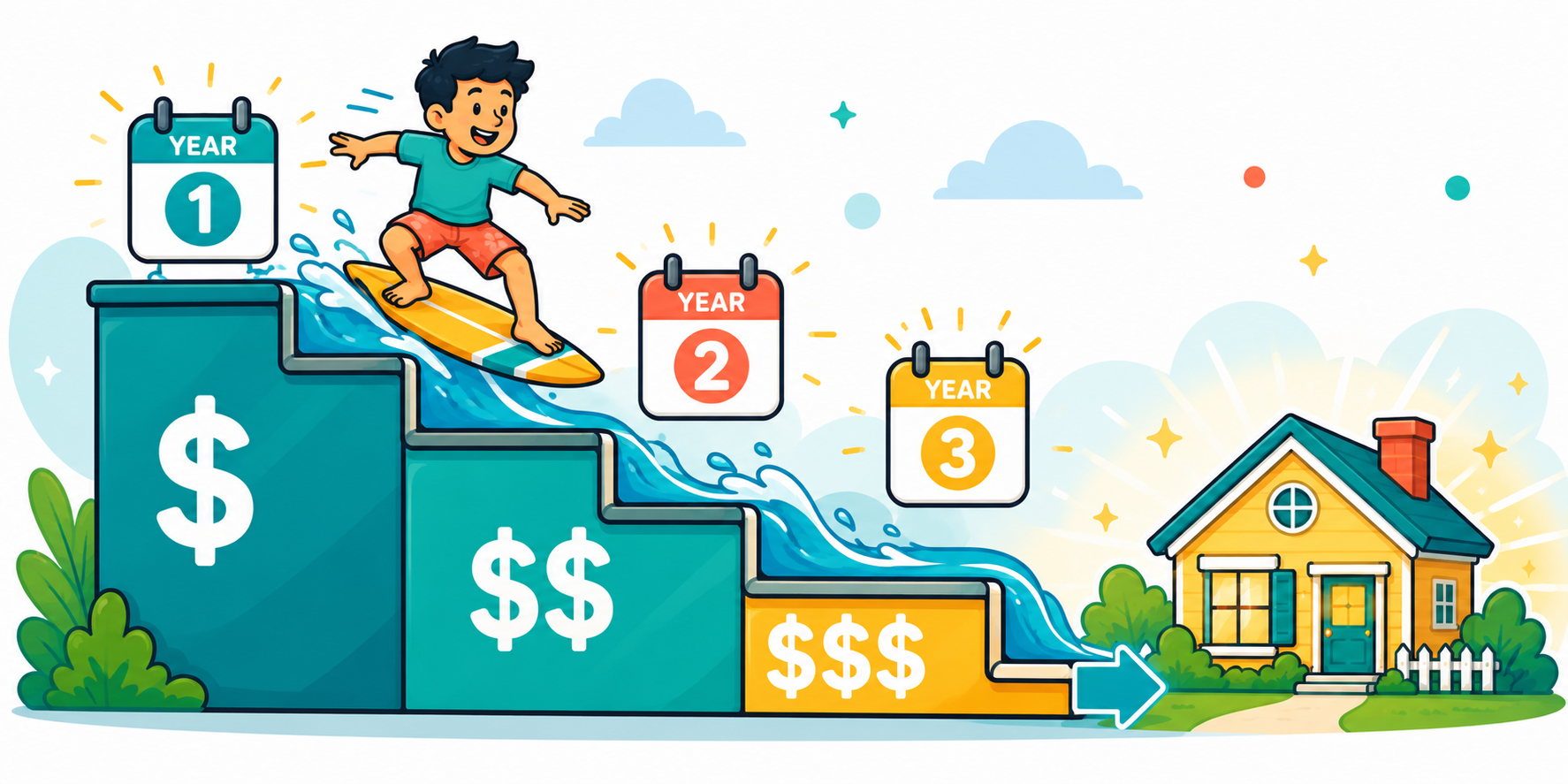
A 2-1 buydown lowers your rate for the first two years of your mortgage. Here's how it works, what it costs, and when it actually makes sense to use one.
What Is a 2-1 Buydown? How Temporary Rate Buydowns Work
If you've been house hunting in the last couple of years, you may have seen listings advertising a seller-paid rate buydown as part of the deal. Or your lender mentioned a 2-1 buydown as a way to make the payment more manageable in the early years.
It sounds attractive. A lower rate upfront, a payment that steps up gradually, and a seller footing the bill. But like most mortgage strategies, the value depends entirely on how well it fits your specific situation.
Here's exactly how a 2-1 buydown works, what it actually costs, who pays for it, and how to decide whether it makes more sense than the alternatives.
What a 2-1 Buydown Is
A 2-1 buydown is a financing arrangement that temporarily reduces your mortgage interest rate for the first two years of the loan, then steps up to the permanent note rate in year three, where it stays for the remainder of the term.
The structure works like this. In year one, your rate is 2 percentage points below the note rate. In year two, your rate is 1 percentage point below the note rate. Starting in year three, your rate is the full note rate you originally qualified for.
If your note rate is 6.5%, your payments in year one are calculated at a rate 2 points lower, year two at a rate 1 point lower, and year three onward at the full rate.
The loan itself is always underwritten at the full note rate. You qualify based on the permanent payment, not the reduced payment. This is an important distinction. A 2-1 buydown doesn't increase your purchasing power. It reduces your payment load in the early years while you're settling into homeownership.
Where the Money Actually Comes From
This is the part that catches buyers off guard. The lower payments in years one and two don't mean the interest disappears. Someone is covering the difference between the reduced payment and what the full payment would have been.
That money is deposited into an escrow account at closing. Your lender draws from it each month to make up the difference between your reduced payment and the actual interest accruing on the loan. By the end of year two, the account is depleted and your full payment kicks in.
The upfront cost of funding that escrow account is roughly equal to the total payment savings across the two-year period. On a $500,000 loan, a 2-1 buydown typically costs between $8,000 and $14,000 depending on the note rate and loan amount.
That cost is almost always paid by the seller, the builder, or the lender as a concession rather than by the buyer out of pocket. This is the core reason 2-1 buydowns became popular when sellers began offering concessions to move properties in a higher rate environment.
Seller-Paid Buydowns: How the Negotiation Works
When a seller offers a 2-1 buydown as a concession, they're agreeing to fund that escrow account at closing from their proceeds. To you as a buyer, it arrives as a reduced payment for two years with no upfront cost.
This is where the strategy has real appeal. In a market where sellers are willing to negotiate, a buyer can effectively request a concession and direct it toward a buydown rather than a straight price reduction. The buydown may produce more tangible near-term value than the same dollar amount shaved off the purchase price, depending on the numbers.
A $10,000 price reduction on a $500,000 purchase changes your monthly payment by roughly $50 to $60 per month. That same $10,000 directed toward a 2-1 buydown can reduce your payment by several hundred dollars per month in year one. The cash flow benefit is front-loaded and immediate.
The trade-off is that the price reduction is permanent and the buydown is temporary. If you stay in the home past year two without refinancing, the payment steps up to the full note rate regardless.
LINK: How a permanent rate buydown through discount points compares to a temporary 2-1 buydown strategy]
The Refinance Assumption Built Into This Strategy
A 2-1 buydown makes the most financial sense when you have a reasonable expectation that rates will be lower within two years and you plan to refinance before or around the time the full rate kicks in.
The logic is straightforward. You use the buydown to lower your payment now. Rates drop. You refinance into a lower permanent rate before your reduced payment period ends. You never pay the full original note rate at all.
This is a legitimate strategy, but it carries real risk. Rates do not always move in the direction buyers expect on the timeline buyers need. If rates stay flat or rise over the next two years, you reach month 25 facing the full original rate with no refinance opportunity that improves your position.
Buying a home with a payment you can genuinely afford at the full note rate is the baseline requirement before a 2-1 buydown makes sense. The buydown should be a bonus that helps you in the short term, not a crutch that makes an otherwise unaffordable payment temporarily workable.
2-1 Buydown vs. Discount Points: Choosing the Right Strategy
These two strategies often get mentioned in the same conversation and they serve different purposes.
Discount points permanently reduce your interest rate for the life of the loan. You pay more upfront, your rate goes down permanently, and if you stay past the break-even point you come out ahead for the remainder of the term.
A 2-1 buydown temporarily reduces your rate for two years. The cost is usually covered by a seller concession rather than your own cash. The benefit is immediate payment relief, not long-term interest savings.
The right choice depends on who's paying, how long you plan to stay, and what you believe rates will do over the next two to three years. In a market where sellers are offering concessions, a 2-1 buydown funded by the seller is often more valuable than asking for the equivalent price reduction. In a stable rate environment where you plan to stay long-term, permanent discount points may produce more total savings.
Neither strategy is universally better. The math on your specific loan is what determines the answer.
Other Buydown Structures Worth Knowing
The 2-1 is the most common temporary buydown structure, but it's not the only one.
A 1-0 buydown reduces the rate by 1 percentage point in year one only, then steps to the full rate in year two. It's less expensive to fund and a simpler structure for buyers who want a modest first-year cushion.
A 3-2-1 buydown reduces the rate by 3 points in year one, 2 points in year two, and 1 point in year three before stepping to the full rate in year four. It's more expensive to fund and less commonly offered, but it's available on certain loan types and in situations where a seller has significant concession capacity.
The 2-1 hits the right balance for most buyers between meaningful payment savings and a realistic funding cost that sellers are willing to cover.
Is a 2-1 Buydown Right for Your Situation?
The answer depends on four things. Whether the seller is willing to fund it, whether you can genuinely afford the full payment in year three if rates don't drop, whether you have a realistic refinance outlook within two years, and how the buydown cost compares to other concession options being offered.
A licensed broker can run the full comparison for your specific loan, purchase price, and market conditions in about ten minutes. That conversation is worth having before you decide how to structure your offer.
Want to see whether a 2-1 buydown makes sense on your specific purchase? Schedule a free 15-minute call and we'll run the numbers with you.