FHA 203(k) Rehab Loans: Buy a Fixer-Upper With One Mortgage
By Terry Leinneweber · May 17, 2026
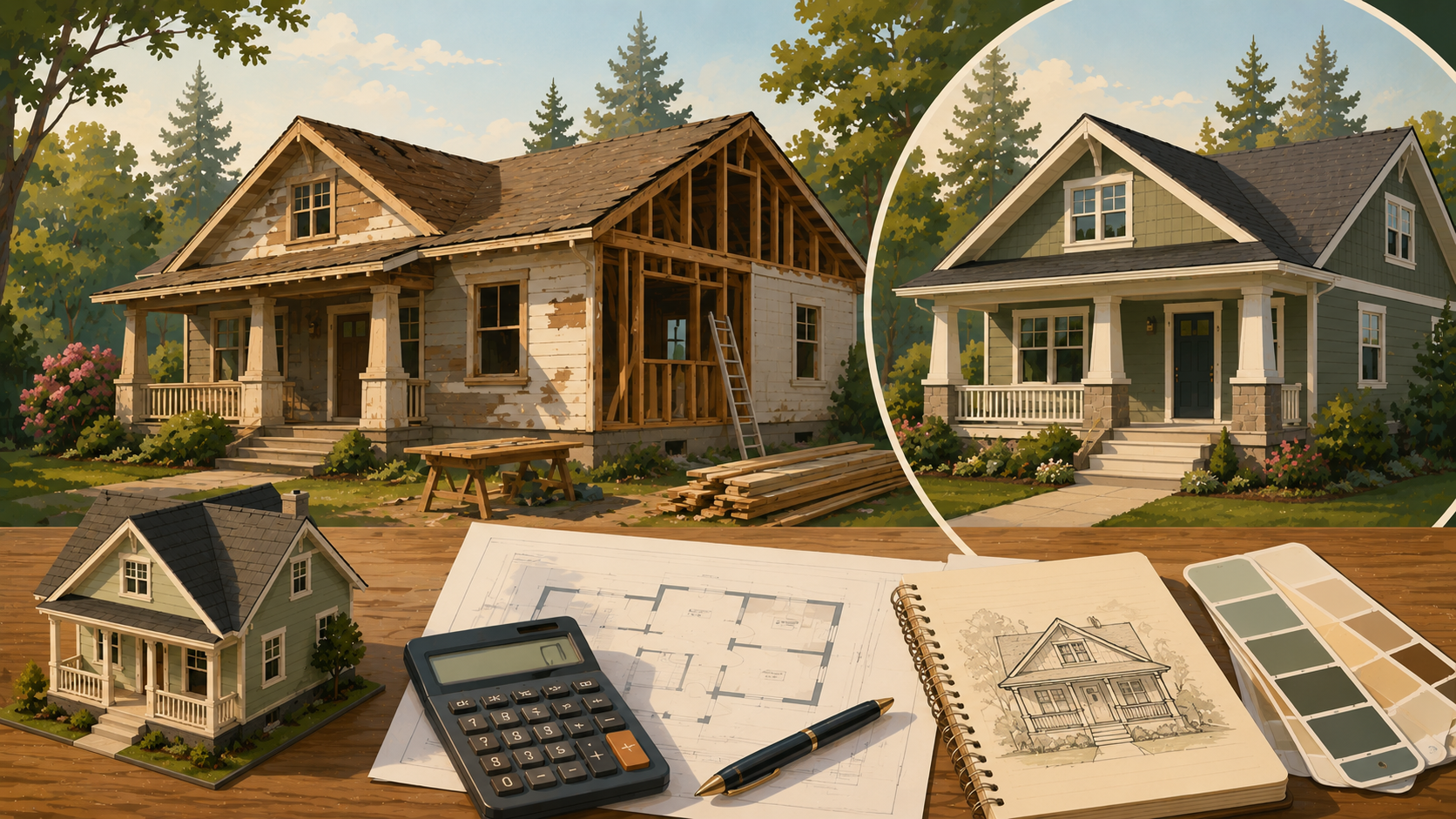
A rehab loan lets you buy a fixer-upper and finance the renovations in one mortgage. Here's how FHA 203(k) loans work and who they're right for in Washington.
FHA 203(k) Rehab Loans: Buy a Fixer-Upper With One Mortgage
The home you can afford and the home you want are not always the same house.
In Washington's market, that gap is real. Move-in ready homes in your price range attract multiple offers. They sell fast, often over asking. But the house two blocks over, the one with the dated kitchen and the worn floors and the bathroom that clearly has not been touched since 1987? It has been sitting. The competition is thinner. The price is lower. And with the right financing, it could become exactly what you wanted.
That financing is the FHA 203(k) rehab loan. It lets you buy the fixer-upper and pay for the renovations with a single mortgage. One loan. One closing. One monthly payment that covers both the home and the work.
Here is how it works, what it costs, and how to know if it is the right move for you.
The Problem It Solves
Most mortgage loans will not finance a home that needs significant repairs. With most traditional mortgage loans, lenders will not pay for home renovations in addition to a purchase. Buyers need to either pay cash for repairs or take out an additional loan after closing.
That creates a real obstacle. You find a home with good bones and a bad kitchen. The lender appraises it based on its current condition. The repairs are not financed. You either bring extra cash you probably do not have, or you walk away.
The FHA 203(k) solves two problems at once. It lets buyers purchase homes that would not otherwise qualify for a mortgage, and it lets those same buyers finance the repairs within the same acquisition loan.
The result is that a home requiring $40,000 in updates does not require $40,000 in cash after closing. It requires a 3.5% down payment calculated on the total of the purchase price plus the renovation budget.
The Two Types of 203(k) Loans
The program comes in two versions. Which one you need depends entirely on the scope of your project.
The Limited 203(k)
The Limited 203(k) is designed for minor remodeling and repairs with a total renovation cost not exceeding $75,000. It covers cosmetic updates like painting and new flooring, minor repairs such as fixing roof leaks and replacing windows, and energy-efficient upgrades like adding insulation or upgrading HVAC systems.
No structural work is allowed under the Limited program. You cannot knock out walls, add square footage, or reconfigure the home's layout. But for a home that needs a kitchen refresh, new floors throughout, updated bathrooms, or a fresh roof, the Limited 203(k) is the simpler and faster of the two options. A 203(k) consultant is not required, which reduces your upfront costs and timeline.
The Standard 203(k)
The Standard 203(k) is the appropriate choice for more substantial renovations. It has no specific dollar cap on renovation costs beyond the overall FHA loan limit for your county, and it allows major projects including structural repairs, complete kitchen and bathroom renovations, room additions, landscaping, and accessibility modifications. The minimum renovation cost must be at least $5,000.
The Standard version requires a HUD-approved 203(k) consultant to oversee the project from bid to completion. That consultant is an added cost and an added step, but their role is to protect you. They review contractor bids, verify the scope of work, and inspect progress at each draw. For a major renovation on an older home, having that oversight built into the process is valuable.
How the Borrowing Math Works
This is the feature that makes the 203(k) genuinely powerful for first-time buyers in Washington.
You can borrow up to 110% of the property's proposed future value, or the home price plus repair costs, whichever is less. That future value is called the after-improved value, and it is determined by an appraiser who evaluates what the home will be worth once the renovations are complete.
Here is why that matters. A home listed at $380,000 in a neighborhood where renovated homes sell for $480,000 might appraise at $460,000 after improvements. Your loan is based on that $460,000 number, not the current as-is value. That means you can borrow more than the purchase price to fund the work, without needing to bring that difference in cash.
Your required down payment is 3.5% of the combined purchase price plus renovation costs. For a $250,000 home with $30,000 in planned repairs, the down payment is 3.5% of $280,000, which comes to $9,800. The entire renovation budget is rolled into the mortgage at the same rate.
What Happens After You Close
This is where the 203(k) differs most from a standard purchase loan. You do not receive the renovation funds at closing. They go into an escrow account managed by your lender.
After closing, contractors are paid in draws based on project milestones and inspections. Your contractor does a phase of work, an inspection confirms it is complete, and funds are released for that phase. This draw system protects you from a contractor disappearing with your money and protects the lender from funds being used outside the approved scope.
Renovation work must start within 30 days of closing. Work must be completed within six months for a Limited 203(k). For Standard projects involving major structural work that makes the home temporarily uninhabitable, you can finance up to six months of mortgage payments into the loan to cover housing costs while renovations are underway. U.S.
One more thing worth knowing: depending on the size and nature of your project, your lender may require a contingency reserve of up to 20% of the renovation cost for unexpected expenses. On a $50,000 renovation budget, that is up to $10,000 held in reserve. Any contingency funds not used are applied to your loan balance at the end.
What You Need to Qualify
The credit and income requirements for a 203(k) are close to standard FHA guidelines, which are more accessible than conventional loans.
A credit score of at least 580 qualifies for the 3.5% minimum down payment, though some lenders set their own floor at 620 to 640 for the 203(k) program specifically. A score below 580 may still qualify with a 10% down payment.
Most lenders require a debt-to-income ratio, meaning total monthly debt payments divided by gross monthly income, of 43% or lower. Griffin Funding
The home must be your primary residence. These loans are only available to buyers who plan to live in the home. You cannot use a 203(k) to flip a property or finance a rental.
The property must be at least one year old. New construction does not qualify. Eligible property types include single-family homes, 2-4 unit properties where you occupy one unit, FHA-approved condominiums for interior work only, and certain manufactured homes.
Expect a 203(k) loan to take 60 days or more to close due to the additional paperwork and back-and-forth with contractors to finalize bids. If you are in a competitive multiple-offer situation, the longer timeline is worth discussing with your agent upfront.
The Rate and Cost Tradeoff
The 203(k) is not a free upgrade. There are two cost considerations worth knowing before you commit.
First, the rate. Mortgage interest rates for FHA 203(k) loans run approximately 0.75% to 1.0% higher than a standard FHA mortgage rate. That premium exists because of the added complexity and construction risk the lender carries during the renovation period.
Second, mortgage insurance. Like all FHA loans, the 203(k) requires an upfront mortgage insurance premium of 1.75% of the loan amount, which can be rolled into the loan, plus an annual premium of 0.55% paid monthly.
Both of these costs are real. Run the full payment estimate before you commit, and compare it against what the same home would cost in move-in ready condition. In many Washington markets, the math still works strongly in the fixer-upper's favor, especially when the after-improved value is meaningfully higher than the purchase price.
When a 203(k) Makes Sense and When It Does Not
The 203(k) is the right tool when the home you can afford needs work you cannot pay for out of pocket, the neighborhood supports an after-improved value that justifies the renovation cost, you are prepared for a longer closing timeline and a more involved process, and you plan to live in the home while or after the work is completed.
It is less ideal when you need to close quickly in a competitive offer situation, the repairs needed are so extensive the home does not meet basic habitability standards even as a temporary measure, or your renovation budget is small enough that a personal loan or seller credit would be simpler and faster.
For many first-time buyers in Washington who are being priced out of turnkey homes, the 203(k) opens a category of inventory that almost no one else is competing for. That is a real strategic advantage in a market where competition remains intense on move-in ready homes at accessible price points.
The Bottom Line
A rehab loan is not a complicated product. It is a straightforward solution to a real problem: the home you can afford needs work, and you cannot fund that work separately after closing.
The 203(k) wraps the purchase and the renovation into one loan, lets you borrow against the home's future value, and builds in a process that keeps the renovation on track. For first-time buyers in Washington willing to put in a little more patience and process upfront, it can be the clearest path to a home that is both affordable and exactly what they want.
Interested in buying a fixer-upper in Washington with a rehab loan?
Schedule a free 15-minute call and we will walk through your renovation budget, your target price range, and whether a Limited or Standard 203(k) is the right fit for your project.