Construction Loans in Washington State: How to Finance a New Build
By Terry Leinneweber · May 24, 2026
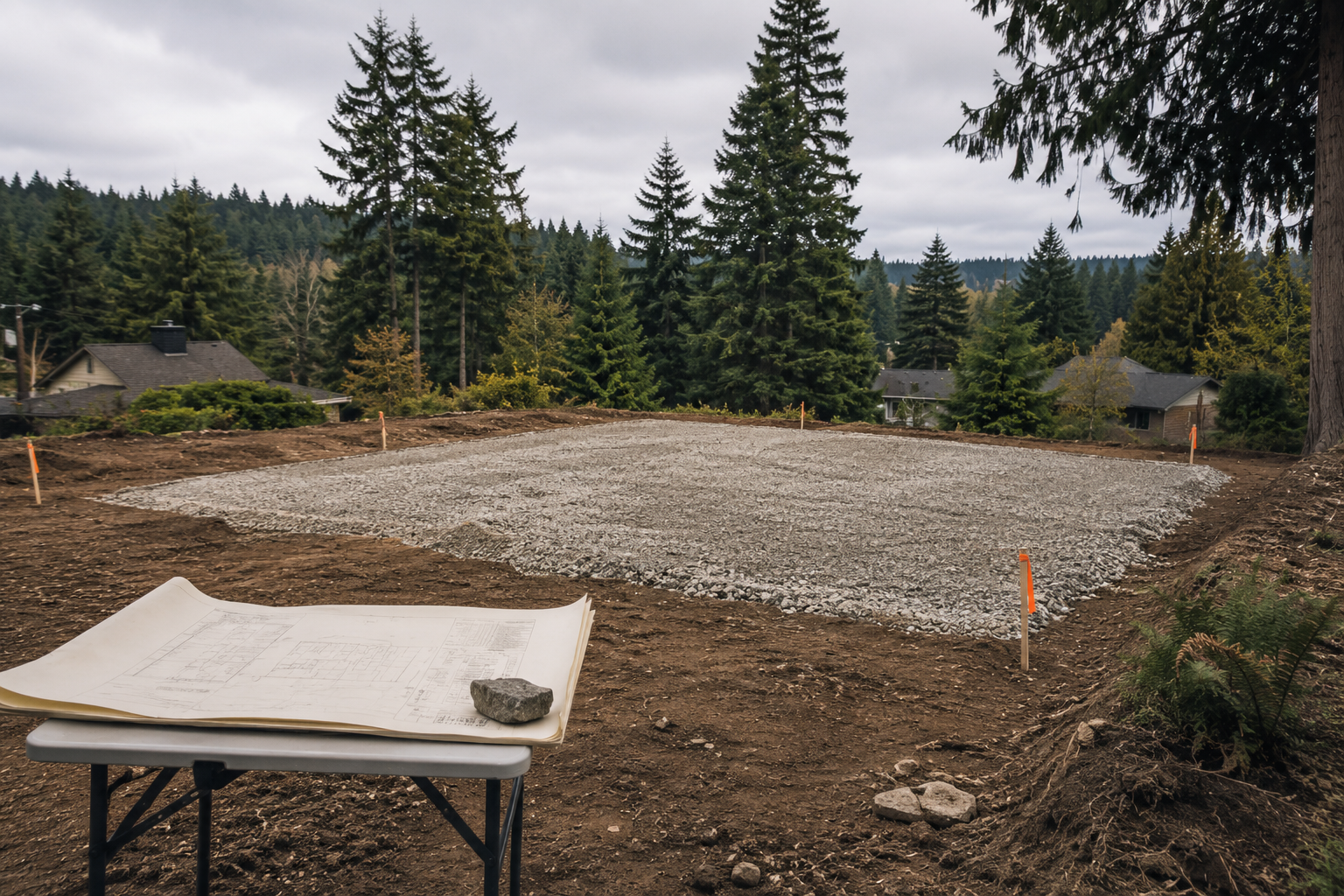
Can't find what you want in Washington's market? Building might be the answer. Here's how construction loans work, what they cost, and how to qualify.
Construction Loans in Washington State: How to Finance Building Your Own Home
You have been looking at homes for months. The inventory in your price range does not fit what you need. The homes that do fit are getting multiple offers. And somewhere in the back of your mind, the idea of just building exactly what you want keeps surfacing.
The question that stops most buyers is not the land or the builder. It is the financing.
Construction loans are one of the more specialized areas of mortgage lending, and most lenders either do not offer them or handle them rarely enough that the process feels uncertain. That uncertainty keeps a lot of buyers from ever getting started.
This post removes the uncertainty. Here is exactly how construction loans work in Washington, what the two main structures look like, what you need to qualify, and what the process looks like from land to closing.
What a Construction Loan Actually Is
A construction loan is short-term financing that funds the building of a home in stages rather than as a lump sum. Construction loans are paid out in increments called draws as different milestones of the building process are completed. This staged payment approach ensures that the builder gets paid only for work that has been finished and inspected.
This matters because your lender is not simply handing your builder a check for the full project cost on day one. Funds are released at verified milestones: typically after site preparation, foundation, framing, rough mechanicals, insulation and drywall, and final completion. An inspection confirms each stage is done before the next draw is released.
During the construction period, you pay interest only on the funds that have been drawn, not on the full loan amount. This keeps your carrying costs manageable while you are building, since you are only paying interest on the portion of the loan that has actually been disbursed.
Unlike a standard purchase loan, which finances an existing property, a construction loan finances a home that does not yet exist. That distinction shapes everything about how these loans are underwritten, priced, and managed.
The Two Structures: One-Time Close vs. Two-Close
This is the most important decision in construction financing and the one most buyers do not fully understand before they start.
The One-Time Close (Single Close)
A one-time close construction loan combines the construction phase and the permanent mortgage into a single loan with a single closing. You go through one approval process, sign one set of documents, pay one set of closing costs, and lock your permanent interest rate at the beginning, before construction starts.
One closing covers all phases, which often lowers total fees compared with two separate closings. There is no requalification risk, no credit re-pull, and no income re-verification at conversion. Your rate certainty is in place from the start, which can reduce stress when rates move during an 11 to 12 month build timeline.
When construction is complete and the home passes final inspection, the loan automatically converts to a permanent mortgage and you begin making standard principal and interest payments. No second closing. No second set of fees. No second approval process.
The Two-Close Construction Loan
A two-close transaction is exactly what it sounds like. You close on the construction loan first, which funds the build. When construction is complete, you refinance out of the construction loan into a permanent mortgage. That means two closings, two sets of closing costs, and two approval processes.
The tradeoff is flexibility. The two-close structure can allow you to shop for the best permanent mortgage rate at the time of conversion, which could be advantageous if rates have dropped significantly during your build. It also gives some buyers access to loan programs or terms that are not available as single-close products.
For most buyers in Washington, particularly those who want certainty and simplicity, the one-time close is the stronger option. For buyers with specific reasons to separate the transactions, the two-close structure has its place. Your loan officer can walk through both scenarios for your specific situation before you decide.
What You Need to Qualify
Construction loans carry stricter requirements than standard purchase loans. This is not a reason to avoid them. It is simply the reality of financing something that does not yet exist.
Credit score. FHA construction loans may allow scores as low as 580, most lenders prefer 600 or higher. Conventional construction loans generally start at 700 or higher. The stronger your credit, the better your rate and the more lender options you have.
Down payment. Conventional construction loans typically require 10% to 20% down on the total project cost, which includes land plus construction. If you already own the land outright, your equity in that land can often count toward the down payment requirement. FHA construction programs allow as little as 3.5% down for eligible borrowers. VA construction loans can go to zero down for eligible veterans with full entitlement, which is one of the most compelling options for veteran buyers in Washington who want to build.
The builder. Your builder is underwritten alongside you. The lender will verify your builder's credentials, licensing, insurance, and track record. They will want architectural drawings, a detailed cost breakdown, a proposed timeline, and a signed construction contract. A builder with a clean license, adequate insurance, and a documented history of completed residential projects moves through lender approval quickly. A builder who lacks those things can derail an otherwise strong borrower file.
Fixed-price contract. Most lenders require a fixed-price or guaranteed maximum price contract from your builder. Cost-plus contracts are typically ineligible because cost overruns create underwriting and draw problems. The lender is basing your loan on a specific project budget. That budget needs to be locked.
The appraisal. Rather than appraising an existing home, the appraiser evaluates the plans and specifications for the completed project and determines the as-completed value. This appraisal helps determine your loan amount and ensures the finished property will be worth at least as much as you are borrowing. If your projected build cost exceeds the appraiser's as-completed value, you have a problem. Work with an experienced builder who prices projects realistically for the market.
Washington-Specific Considerations
Building in Washington has its own set of variables that affect your timeline and budget.
Permit timelines are a real factor. Processing in King County runs 65 to 100 days depending on project complexity. Seattle and surrounding cities pile on their own requirements. A lender who does not understand local permitting will structure loans that do not match reality.
In Snohomish County, the greater Seattle area, and surrounding communities, available land with build potential exists, but it competes against limited move-in ready inventory. Buyers who identify a buildable lot in a school district or neighborhood they want, and who cannot find existing inventory there, are often the strongest candidates for construction financing. The absence of existing competition on a dirt lot is the same thing as the absence of a bidding war.
Seismic requirements in western Washington result in higher foundation costs than in other markets. Enhanced engineering specifications require larger initial loan amounts and specialized contractor coordination. Eastern Washington builds generally move faster, cost less per square foot, and face less permitting complexity, which is one reason construction financing has become increasingly popular in markets like Spokane, the Tri-Cities, and Wenatchee.
Weather also compresses your effective build window in western Washington. A project that breaks ground in October faces a wet, slow winter before spring momentum returns. Factor your start date into your timeline with your builder before you lock any financing structure.
How the Draw Process Works in Practice
Once your loan closes and construction begins, the draw schedule becomes the operational backbone of the project.
VA's construction guidance, which reflects the standard most lenders follow, requires written borrower approval before each draw is released. A 10% final draw is typically held until the project is complete and the home passes final inspection. Draw funding generally targets five days from the draw request being submitted.
The inspection before each draw is your protection and the lender's. It confirms work was completed correctly before the next phase is funded. If an inspection identifies incomplete or substandard work, the draw is held until the issue is resolved. This structure keeps your builder accountable throughout the build without you needing to be on-site every day.
Stay engaged with your loan officer during construction. Rate locks are real financial instruments with expiration dates. Build phases require timely draw requests and inspection coordination. Borrowers who treat the process as passive tend to encounter delays and added costs.
Is Building Right for You?
Construction financing is not for every buyer. It is the right path when the home you want does not exist in the market you want to be in, when you have the patience for a 9 to 14 month build timeline, and when you are willing to be an active participant in the financing process rather than a passive one.
For buyers in Washington's constrained inventory markets, particularly those targeting specific neighborhoods, school districts, or rural parcels with meaningful land availability, building gives you access to a home that no amount of offer-writing on existing inventory can provide.
The financing is specialized. The process requires a loan officer who works with construction products regularly, a builder your lender can approve, and a borrower who stays organized and responsive throughout the build.
Thinking about building a home in Washington State and want to know if construction financing makes sense for your situation?
Schedule a free 15-minute call and we will walk through your land situation, your builder options, and which construction loan structure fits your timeline and budget before you commit to anything.